The Roofing Founders Who Sold to Private Equity, Then Came Back
Years into roofing’s private-equity boom, a growing number of entrepreneurs are leaving the platforms they joined, buying businesses back or starting over. Their second acts are becoming a test of the industry’s consolidation experiment.
When Victor Smolyanov sold Victors Home Solutions in 2023, his company was exactly the kind of business private-equity-backed roofing platforms were built to attract: a recognizable brand, a strong local reputation and a founder with a prominent industry profile. Victors soon became one of the showcase businesses inside Vertex Roofing Partners, part of a wave of consolidation that has swept through residential roofing over the past several years.
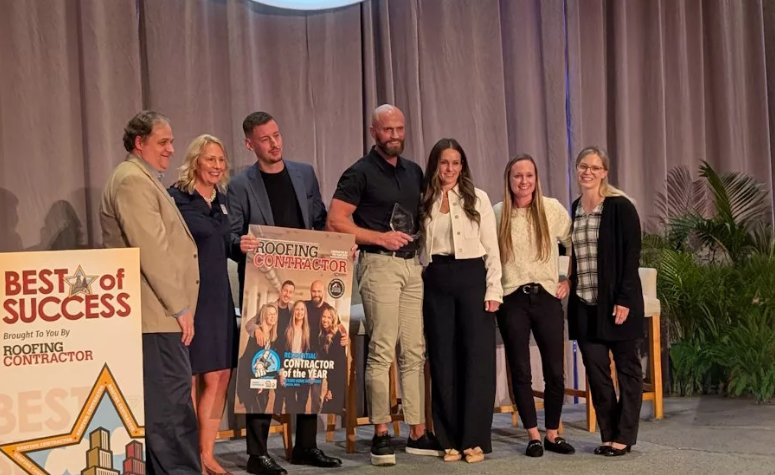
Victors Home Solutions founder Victor Smolyanov and team accept Roofing Contractor’s 2024 Residential Contractor of the Year award at the Best of Success conference.
This summer, Smolyanov announced that he was back. He had launched Build Brands, a new home-improvement parent company, and said more than 20 members of his original team were joining him. His explanation was diplomatic: he said he missed customers, missed the work and realized that an advisory role was not for him.
Vertex wasn't mentioned.
Smolyanov is hardly alone. Across the roofing industry, enough time has now passed since the first major wave of private-equity investment to see what happens after the closing dinners, press releases and promises of accelerated growth.
Some founders have retired exactly as planned. Others continue to run the companies they sold and appear to be thriving. But a growing collection of prominent roofing entrepreneurs has taken a different path, resigning from platforms, starting new businesses, moving into adjacent parts of the industry or, in some of the most striking cases, buying their old companies back.
The phenomenon is providing a new way to judge the hundreds of roofing acquisitions completed during the industry's private-equity boom. The question is no longer simply who bought whom. It is what happened afterward.
The Second Act
Mike Braun spent more than two decades building businesses in exterior construction. His companies, including 123 Exteriors and Elite Construction Solutions, ultimately became part of a larger platform under Accuserve.
This summer, Braun announced another transaction: he bought Elite back.
Braun's announcement was notably gracious. He credited Accuserve with helping the company grow, enter new markets and evolve into a multibrand organization. But the outcome itself was significant. The founder who had built the business, partnered with institutional capital and spent years inside the larger organization had decided that the company's next chapter would once again have him as its owner and CEO.
Ken Kelly's path was more dramatic. Kelly Roofing, the Florida business his family spent decades building, partnered with private equity in 2020. Kelly later stepped away from day-to-day operations and began advising contractors. By 2024, his comments about private equity had become more cautionary.
“There’s a lot of games played in private equity,” Kelly told Roofing Contractor that year while explaining his work helping contractors prepare their businesses for sale. His goal, he said, was to help roofing contractors preserve their value and avoid being taken advantage of.
Then came another turn: Kelly bought the family company back, bringing his path full circle from founder to seller, retiree, adviser to other sellers and, eventually, owner again.
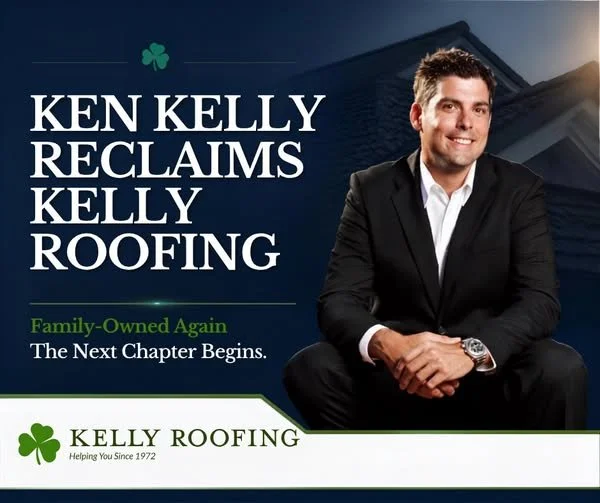
Ken Kelly announces his return as owner of Kelly Roofing, marking the company’s transition back to family ownership and the beginning of a new chapter.
Leaving, But Not Leaving Roofing
Not every founder who exits a platform buys his old company back. Some simply find another way to return to the industry.
Martin Pettigrew built Monarch Roofing in the Carolinas before selling the business to Vertex. His tenure following the transaction was relatively short, and he eventually resurfaced not with another roofing contractor but with Maverick Metal & Roof Supply, a roofing distribution business.
The business model had changed, but the industry hadn't.
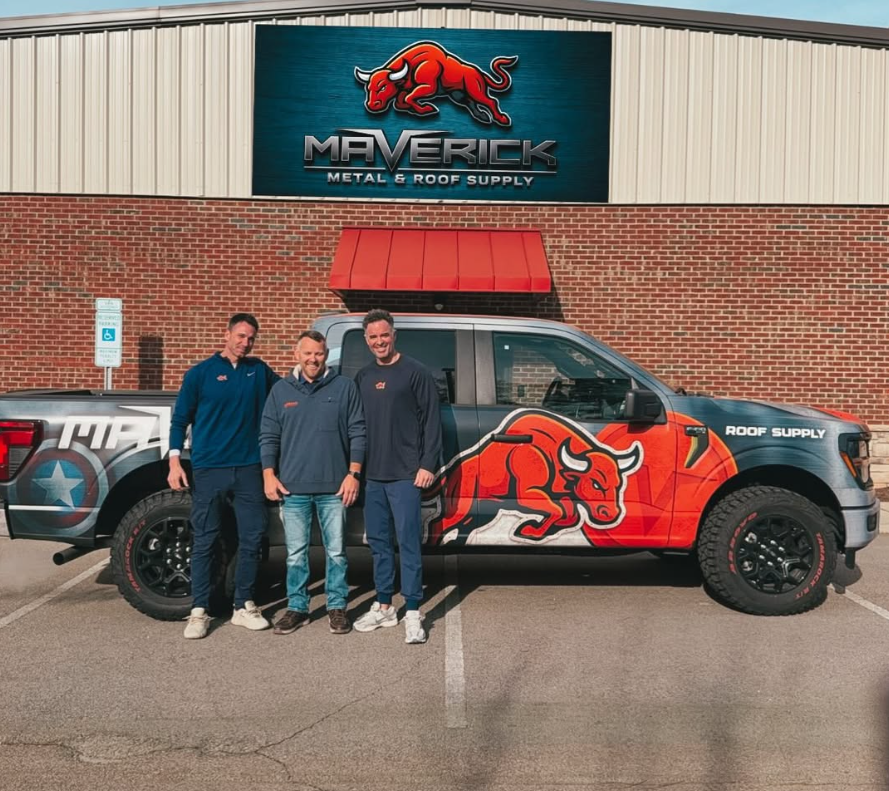
Martin Pettigrew, right, with the Maverick Metal & Roof Supply team outside the company’s facility, marking his return to the roofing industry through distribution after his time at Monarch Roofing.
That’s important to note because one of the assumptions behind many roofing transactions is that the founder has reached the end of an entrepreneurial journey. In a surprising number of cases, that does not appear to be true. The founders still want to build. They just do not necessarily want to build inside the platform they joined.
A Founder Resigns
Derek Lindsey offers another version of the story. For more than two decades, Lindsey built Infinity Roofing & Siding. In early 2023, the company partnered with Stronghouse Solutions, a platform backed by O2 Investment Partners.
At the time of the transaction, Lindsey spoke publicly about finding a partner that aligned with Infinity's standards and vision and could help position the company for continued growth. Three and a half years later, he announced that he was leaving.
“Today officially marked my final day with Stronghouse,” he wrote in July.
The wording of his departure was unusually personal. Lindsey said he had made the decision to resign three months earlier but stayed through the transition. He wrote about having “poured” himself into the employees around him, said he had “left it all on the field” and disclosed that he continued to hold a significant investment in the business.
Nothing in Lindsey's announcement accused Stronghouse of wrongdoing, and a founder departure on its own does not establish that a partnership failed. But the sequence illustrates the challenge facing consolidators. In 2023, the partnership was described as the vehicle that would help carry a 22-year-old company into its next chapter. By 2026, its founder had resigned.
Sometimes, the Model Works Exactly as Intended
There is another side to the story.
Sam and Frank Stilley spent decades building Amstill Roofing in Houston before they sold the company at the end of 2024 to Alloy Roofing. This summer, the Stilley family announced its retirement.
Key managers remained, the company continued operating and the founders thanked their employees while expressing confidence in the business's future. There was no new roofing startup, no buyback and no public criticism of the buyer.
For a family that had spent more than 50 years building a company, that may represent exactly what a successful transaction was supposed to accomplish.
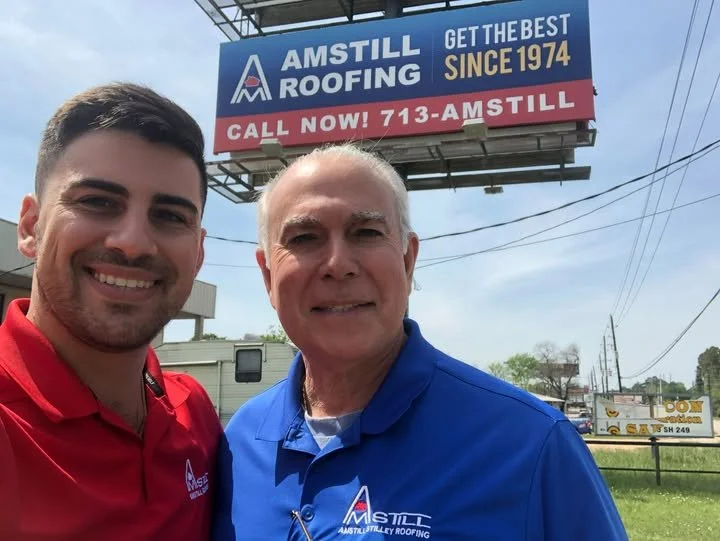
Sam and Frank Stilley of Amstill Roofing, whose family sold the Houston-based company to Alloy Roofing in 2024 before stepping into retirement.
Again, that’s an important note. A 70-year-old founder selling a business and retiring 18 months later tells investors very little about the quality of a platform. A 40-year-old founder leaving after several years, assembling former employees and starting again tells them considerably more.
The Question Sellers Can Now Ask
For years, private-equity-backed roofing platforms have competed largely on variations of the same pitch: keep your brand, continue running your company, gain access to better systems and resources, participate in the upside, protect what you built and accelerate growth.
The language differs from buyer to buyer, but the promise is broadly familiar.
Today, sellers have something they did not have during the earliest years of the consolidation boom: a track record. There are now founders who have been living with these transactions for five years or longer, creating a much simpler form of due diligence.
Can I talk to the people who sold to you five years ago?
Not the founder who closed last month or the seller appearing in the newest acquisition announcement. The early partners.
Ask whether they are still there, what changed after the transaction, whether they still control the decisions that mattered most to them, what happened to their employees, whether the promised resources arrived, whether the business grew and what happened to the equity they rolled into the platform.
Then ask the question that may matter more than all the others:
Knowing what you know today, would you sell to them again?
The Quiet Advantage of Founder Retention
There are platforms whose answer to that scrutiny may be compelling.
At Infinity Home Services, several of the company's earliest partners remain active operators years after their transactions, including Josh Sparks, Paul and Tara Collins and Jason and Derek Couto. They have continued operating through years of acquisitions, changing market conditions and institutional ownership.
That kind of longevity is easy to overlook in an industry obsessed with announcing the next deal, but it should not be. The ability to retain entrepreneurial founders may ultimately become one of the most important measures of a home-services platform.
Anyone can acquire a business. Keeping the person who built it motivated, invested and enthusiastic five years later is much harder.
Roofing's PE Experiment Is Old Enough to Grade
The roofing consolidation boom is no longer new. The first transactions of the current cycle have aged enough that founders have completed earnouts, served through transition periods, experienced recapitalizations and watched the strategies they were sold play out in practice.
Some have prospered inside the system. Some have retired. Others have walked away, while a handful have returned to the very businesses or industries they supposedly left behind.
That does not prove private equity has failed roofing. It proves something more useful:
The industry's private-equity experiment is finally old enough to grade.
For sellers contemplating transactions today, that may fundamentally change the balance of information. They no longer have to rely solely on projections of what life with a buyer might become. They can find someone who already lived it.
And increasingly, those founders have stories to tell.
Editor's note: Founder outcomes described in this article are based on public company announcements, industry reporting and public statements by the founders themselves. A founder's departure does not necessarily indicate that a partnership was unsuccessful.